Every founder spends countless hours thinking about their product. Features to build, bugs to fix, customers to acquire, metrics to improve, and growth targets to hit. It makes sense. Your product is the visible part of the business. It is what customers interact with, what investors evaluate, and what the market ultimately judges.
But there is something many founders underestimate during the early stages of building a company.
The people.
More specifically, the first few people they bring into the company.
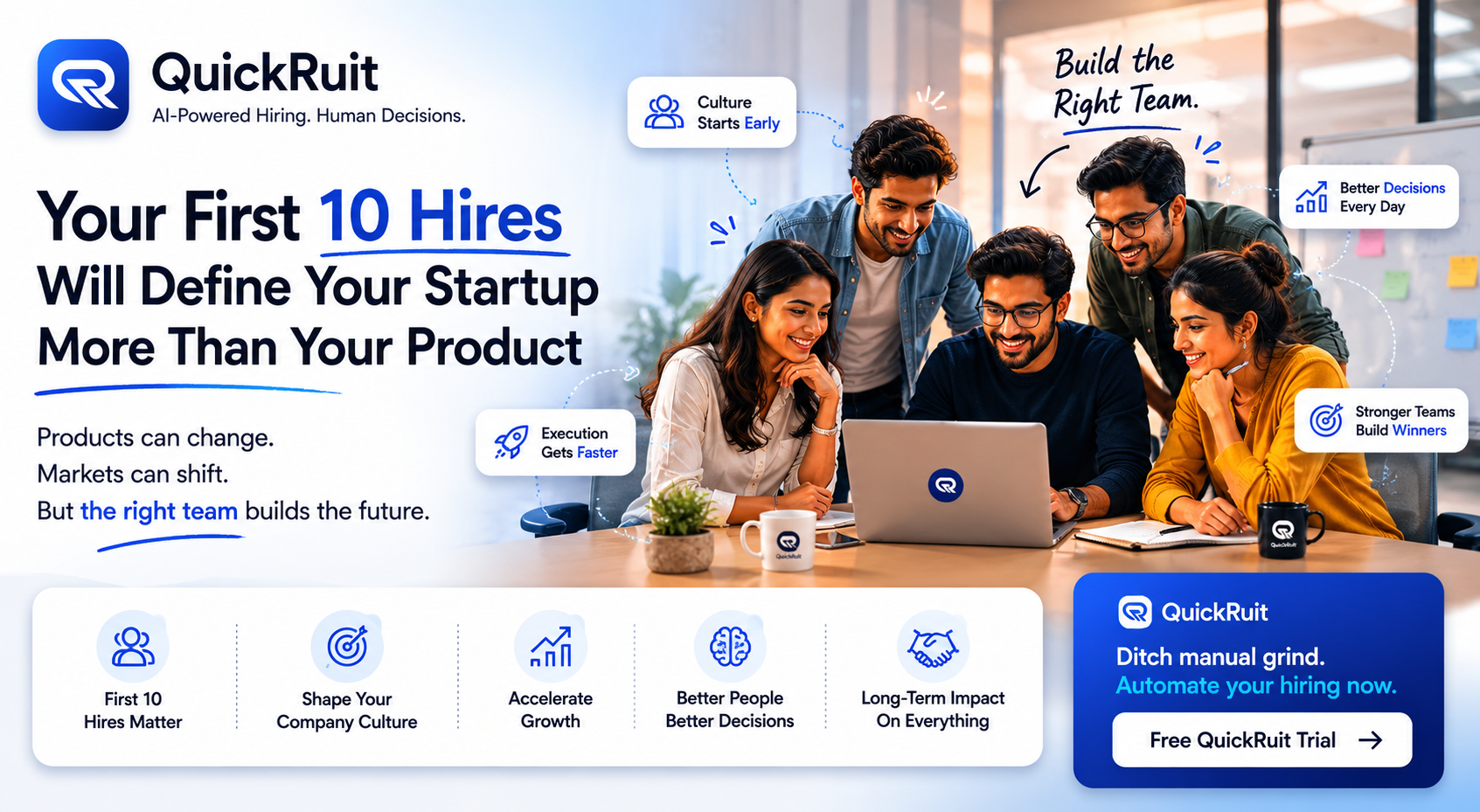
While products evolve constantly, the people building them often determine whether the company succeeds or fails. In fact, your first ten hires will likely define the future of your startup more than the product itself.
That may sound surprising in a world obsessed with product-market fit and growth strategies, but look closely at successful startups and a pattern begins to emerge. Great companies are rarely built by products alone. They are built by exceptional teams that know how to execute, adapt, and solve problems under pressure.
Products change. Markets change. Customer expectations change. Entire business models can pivot within months. A strong team can navigate those changes. A weak team often struggles regardless of how good the original idea was.
That is why early hiring decisions carry so much weight.
In a startup with five employees, every individual has influence. Every conversation shapes direction. Every decision impacts execution. Every hire contributes to culture, communication, and customer experience. One exceptional hire can accelerate growth for months. One poor hiring decision can slow an entire company down.
Many founders make the mistake of treating hiring as something that happens after the product gains traction. Product comes first. Hiring comes later. The reality is the opposite. As a startup grows, the cost of a bad hire increases dramatically. Poor hiring decisions create delays, introduce misalignment, consume management bandwidth, and reduce overall productivity.
More importantly, they shape culture.
Startup culture is not created through mission statements, office posters, or company values listed on a website. Culture is created by people. Your earliest employees establish expectations for how work gets done, how problems are solved, and how decisions are made. Future hires learn from those behaviors. Over time, those behaviors become the company itself.
This is why the first ten hires matter so much. They are not simply filling positions. They are helping define the operating system of the startup.
The challenge, however, is that identifying great candidates is harder than ever. Most hiring processes still rely heavily on resumes, even though resumes reveal very little about how someone will actually perform inside a startup environment. A resume can show previous experience, education, and achievements, but it cannot reveal curiosity, ownership, adaptability, communication skills, or problem-solving ability.
These are often the qualities that matter most in startup teams.
As a result, founders spend hours reviewing resumes, conducting repetitive screening calls, and making decisions based on incomplete information. Despite all that effort, hiring remains highly subjective. The candidate with the strongest resume is not always the strongest performer. The candidate with the most impressive credentials is not always the best fit.
What startups really need is visibility into capability.
Can this person solve problems independently? Can they communicate effectively? Can they adapt when priorities change? Can they take ownership without constant supervision? Can they execute consistently under uncertainty?
These questions matter far more than polished bullet points on a document.
This is one of the reasons hiring is gradually moving toward more structured and skill-based evaluation methods. Instead of relying entirely on resumes, modern teams are focusing on how candidates think, communicate, and respond to real-world situations. The goal is not simply to hire faster. The goal is to hire better.
Because startup success is rarely determined by a single feature release or marketing campaign. It is determined by the quality of the people making hundreds of decisions every week.
Founders often ask how to build a stronger company. The answer is surprisingly simple: build a stronger team.
A great team can improve an average product. An average team can ruin a great product.
That is why your first hires matter so much. They are not just employees. They are builders of the company itself.
The startups that win over the next decade will not necessarily be the ones with the most features. They will be the ones with the best people executing behind those features.
And that journey begins with the very first hiring decision.
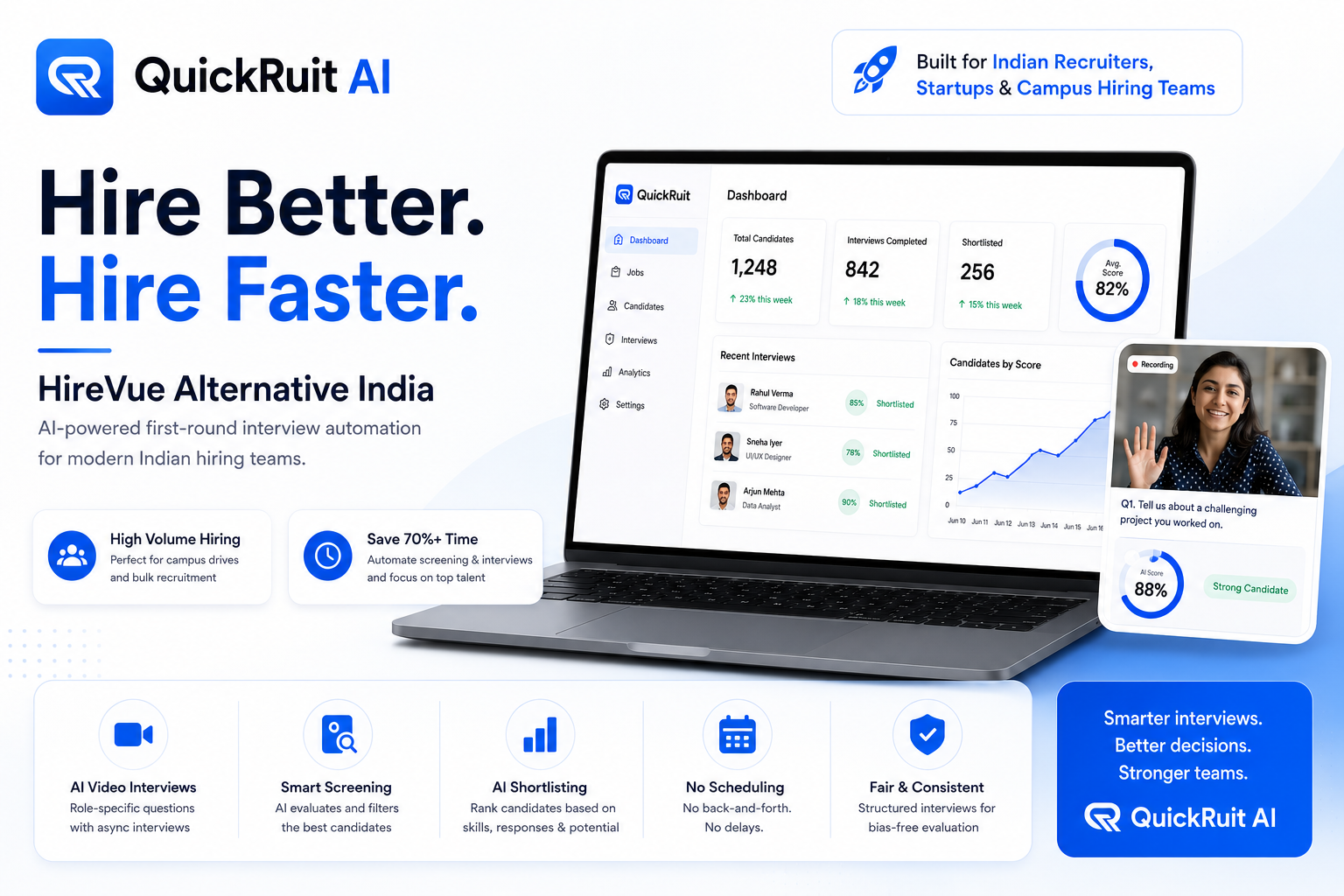
At QuickRuit, we believe startup hiring should focus less on resumes and more on real capability. That is why we are building AI-powered hiring workflows designed to help teams evaluate candidates through structured interviews, smarter screening, and skill-focused assessments.
Build a stronger team from day one.
👉 Explore QuickRuit: https://www.quickruit.in
Ditch the manual grind. Start identifying talent, not just resumes. Start free on QuickRuit.